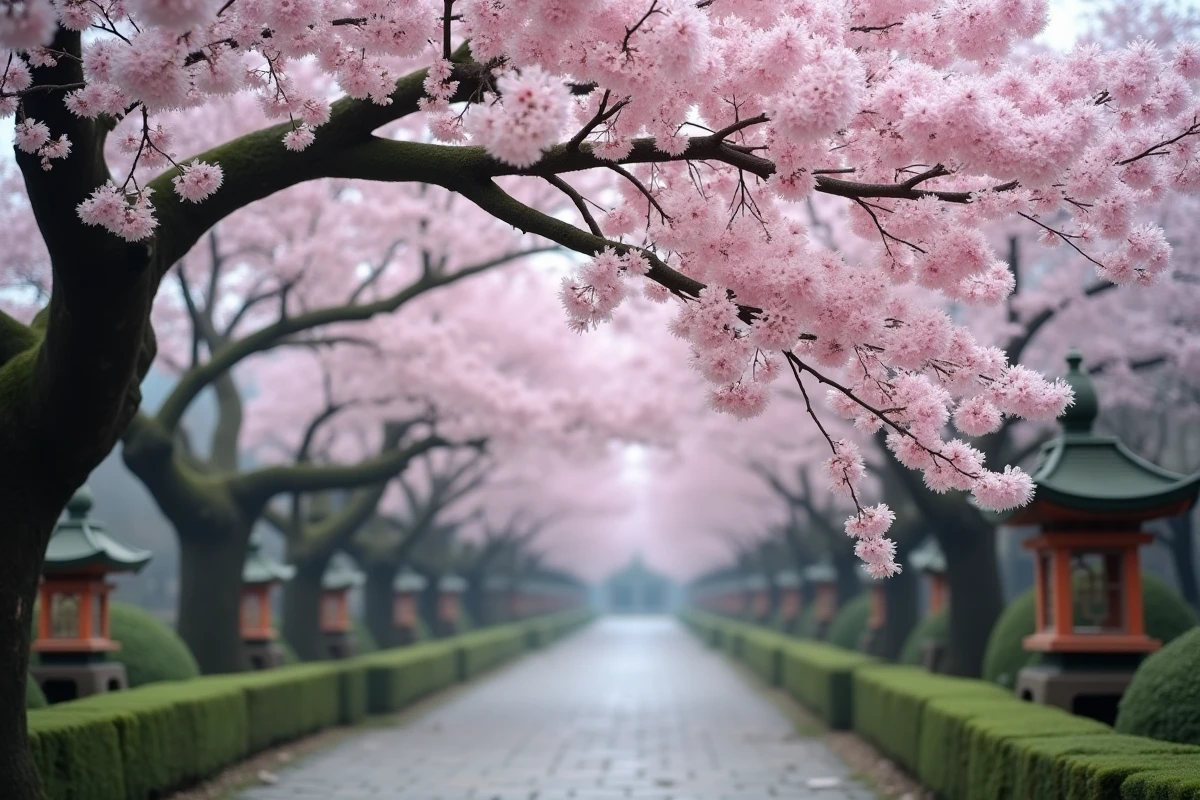
Every spring, thousands of trees are covered in pink flowers in parks, streets, and gardens around the world. This color is not insignificant. Depending on the eras and continents, pink flowering trees carry profoundly different meanings, ranging from mourning to celebration, from fragility to strength. Understanding these symbols is to read a botanical language that human cultures have been writing for centuries.
Sakura in Japan: why the pink bloom embodies the ephemeral
Have you ever seen images of crowds sitting under cherry blossom trees in Tokyo or Kyoto? This tradition is called hanami, literally “viewing flowers.” It dates back to the Nara period and remains a major collective ritual in Japan today.
The sakura blooms for only a few days. This brevity makes it a symbol of mono no aware, a Japanese aesthetic concept that denotes sensitivity to the fleeting beauty of things. The pink cherry blossom reminds us that nothing lasts, and that this fragility is what gives value to the present moment.
This connection between the pink bloom and the acceptance of the passage of time permeates Japanese poetry, painting, and even funeral practices. Studying the meaning of pink flowering trees allows us to measure how a simple botanical phenomenon can structure an entire worldview.
Recent work in cultural studies also shows that sakura is subject to contemporary reinterpretations. Feminist and LGBTQ+ collectives in Japan now associate it with resilience and annual rebirth, rather than merely the passive acceptance of fragility.
Peach Blossom in China: pink as a promise of happiness
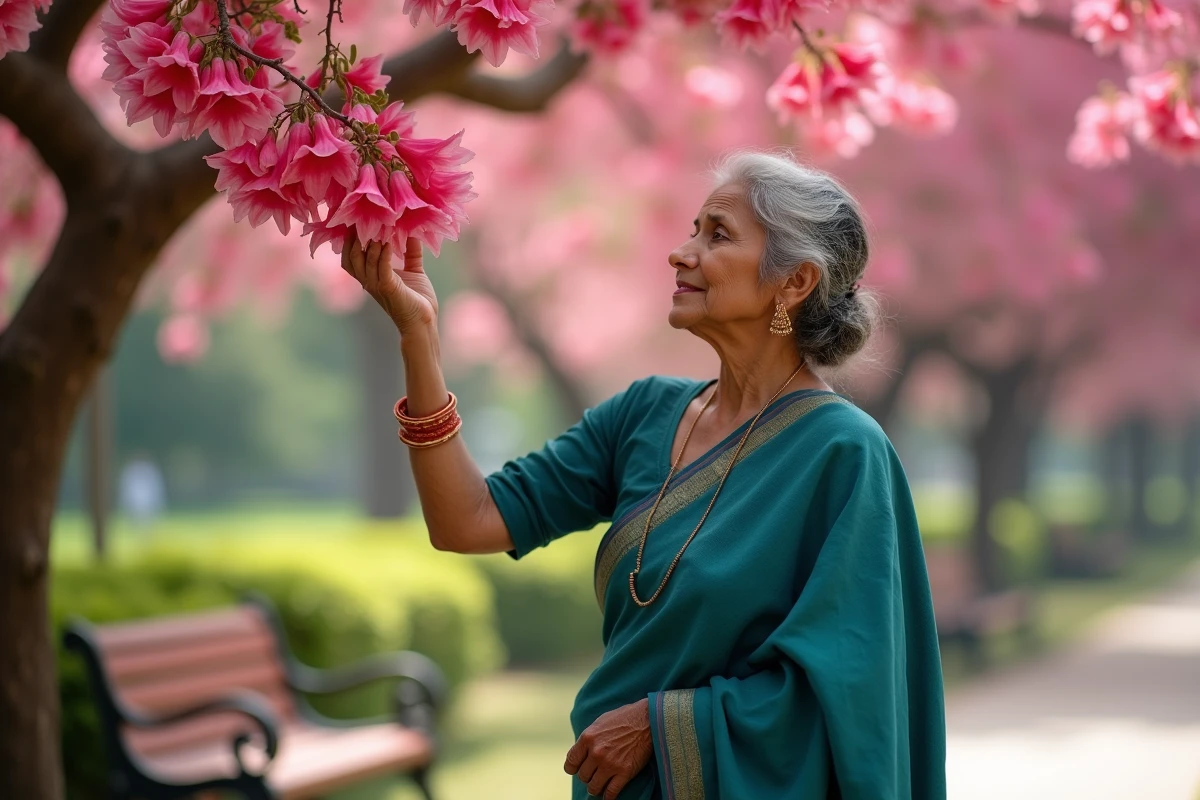
In China, it is the peach tree that concentrates the symbolism of pink. The peach blossom heralds spring and represents luck, longevity, and marital happiness. During the Chinese New Year, flowering peach branches are placed in homes to attract prosperity.
The peach tree symbolizes renewal and protection against evil spirits in Taoist tradition. Its pink flowers do not merely decorate interiors: they participate in a specific ritual act, rooted in a cosmology where nature and human destiny are intertwined.
The difference with Japan is striking. While the sakura celebrates the beauty of what disappears, the Chinese peach blossom looks to the future. The same pink flowering tree, two opposing interpretations of time.
Jacaranda in Mexico: a pink-purple tree become an urban emblem
The jacarandas of Mexico present a different case. Every spring, these trees cover the avenues of the Mexican capital with a spectacular bloom, in shades ranging from pink to purple.
Their presence in Mexico dates back to the early 20th century, when the Japanese botanist Tatsugoro Matsumoto planted them in several neighborhoods of the city. Since then, the jacaranda has become an identity marker of the capital. Residents associate its blooming with the return of warmth and a sense of local pride.
The jacaranda illustrates how an imported tree can acquire cultural value in just a few generations. Its pink-purple bloom does not have ancient mythological roots in Mexico, but it today structures the emotional relationship of the inhabitants to their city.
What these three examples reveal about the color pink
Japan, China, Mexico: three continents, three trees, three meanings. The common thread remains the color. The plant pink evokes a strong emotional reaction everywhere, linked to the temporary nature of blooming. A few shared traits emerge:
- The pink bloom marks a seasonal transition, often associated with spring and renewal
- It provokes collective gatherings (hanami in Japan, walks under jacarandas in Mexico, New Year decorations in China)
- Its limited duration enhances its symbolic value, whether it evokes fragility, hope, or celebration
Pink flowering trees and urban well-being: a contemporary issue
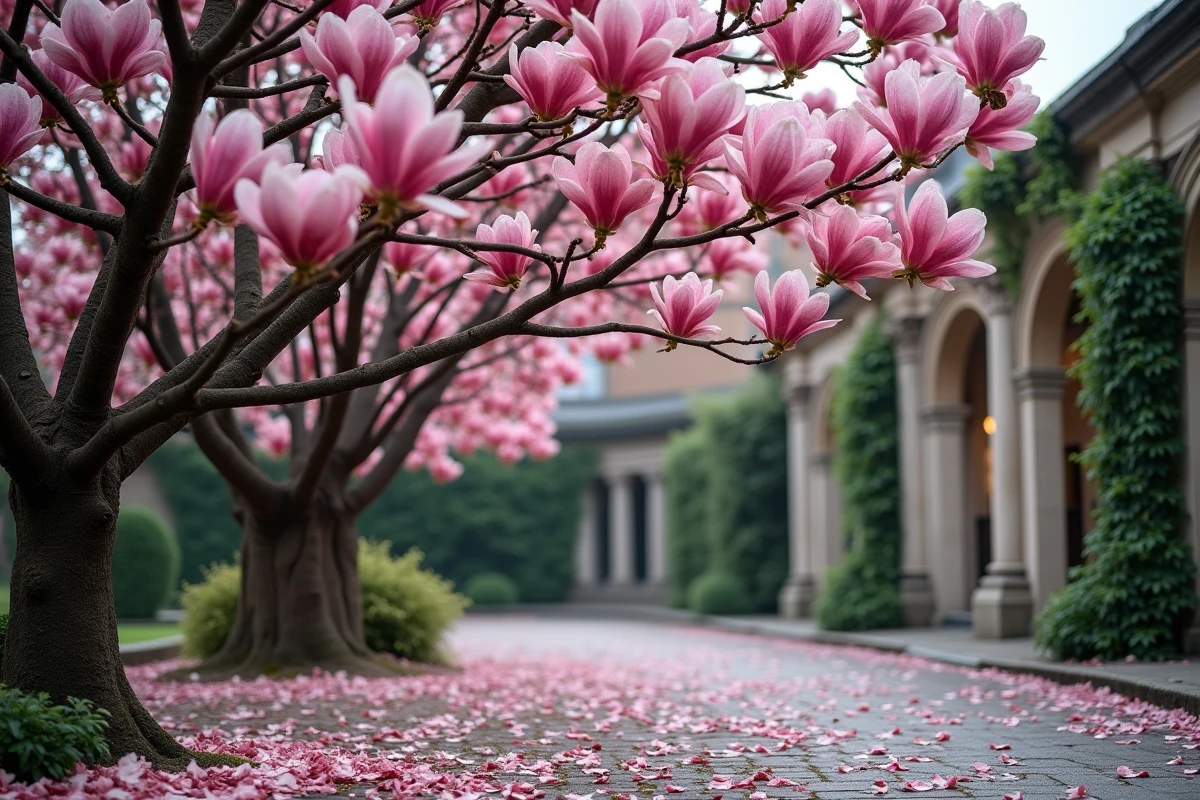
Beyond cultural symbolism, pink flowering trees play a concrete role in today’s cities. A report from the World Health Organization on urban green spaces, updated in 2022, cites flowering cherry trees in Seoul and Tokyo as examples of plantings that combine cultural value, psychological well-being, and heat island reduction.
Several metropolises are now integrating pink flowering species (ornamental cherry trees, prunus, almond trees) into their climate adaptation plans. The choice is not solely aesthetic. These trees contribute to thermal comfort, and their blooming has a measurable effect on the morale of residents.
This urban shift gives a new dimension to trees long confined to the poetic or spiritual realm. The sakura or flowering almond transitions from cultural symbol to public health tool.
Which pink flowering species to plant according to the climate
Not all pink flowering species adapt everywhere. Here are some guidelines to help make a choice:
- The ornamental cherry (Prunus serrulata) prefers temperate climates and does not tolerate very hot summers well
- The almond tree (Prunus dulcis) tolerates drought and is suitable for the Mediterranean region
- The jacaranda (Jacaranda mimosifolia) needs warmth and does not withstand prolonged frost
- The Pissard’s plum adapts to most European soils and blooms as early as late winter
Choosing a pink flowering tree for a garden or public space means inscribing a fragment of ancient symbolism into a daily landscape. The almond tree recalls Mediterranean wisdom, while the ornamental cherry carries centuries of Japanese contemplation. Even planted far from its country of origin, a pink flowering tree retains a cultural weight that its blooming reactivates each year.