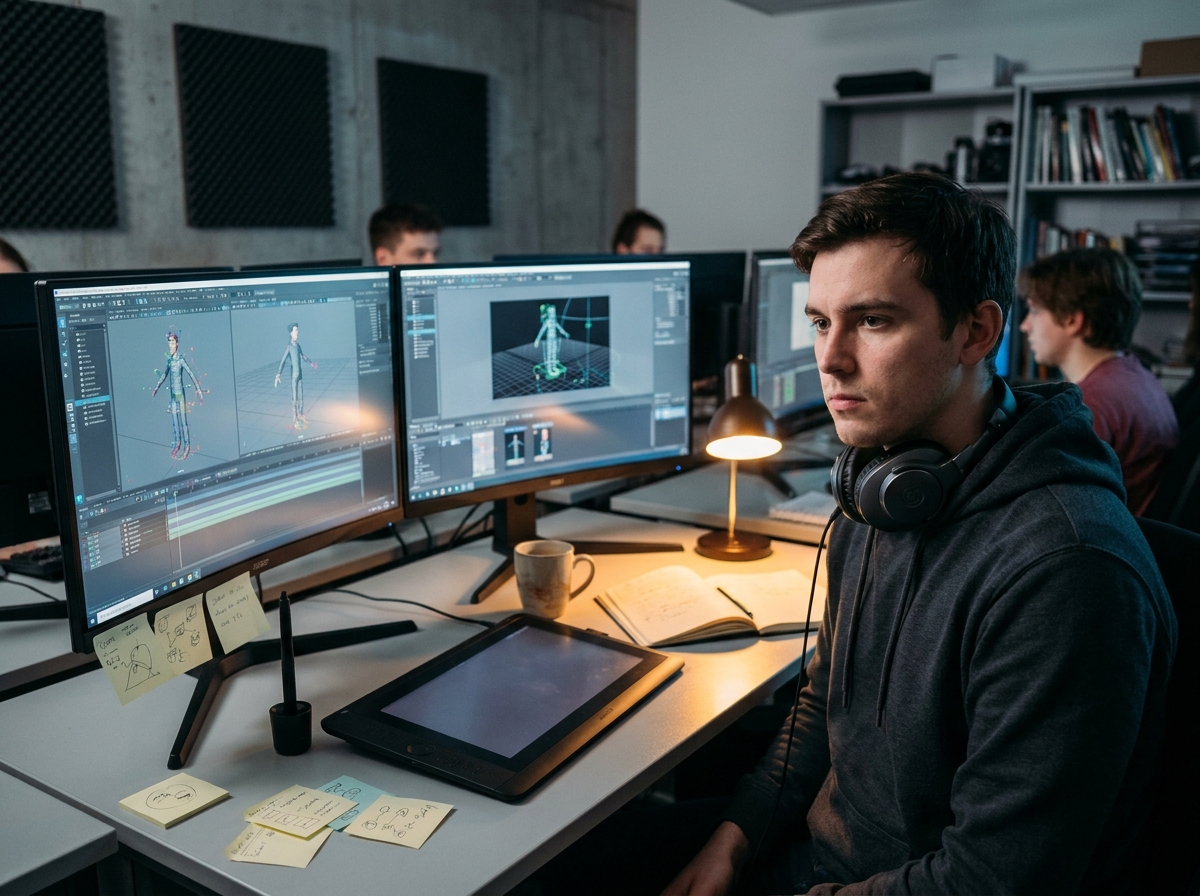
A third-year 3D animation student spends their night fixing mesh intersections on a secondary character that no one will look at for more than two seconds on screen. This kind of micro-task represents a considerable part of daily life in training, and even more so in the studio. Before committing to a course in 3D animation and visual effects, it’s best to know what the days actually look like, the skills required, and the conditions for entering the job market.
Studio specialization: the compartmentalization that brochures don’t show
Schools often present the curriculum as training for a single profession, that of a “3D artist.” In practice, studios break down production into very distinct roles: layout, creature animation, particle FX, compositing, rigging, grooming, lighting. A junior who arrives without having chosen their specialty finds themselves struggling with job offers that require a sharp mastery of just one link in the chain.
This compartmentalization begins during training. In the first sessions, you touch on everything. Then, starting from the second or third year, you have to make a decision. The choice of specialization conditions the entirety of the professional path, and going back costs time. A student who hesitates between compositing and character animation does not work with the same software, does not work on the same types of projects, and does not interact with the same people in the studio.
To better understand the realities of studying 3D animation and visual effects, one must accept that the versatility touted at the beginning of the course gives way to a sometimes brutal specialization as soon as production begins.
Generative AI tools and new technical prerequisites
Traditional training teaches Maya, 3ds Max, Blender, Houdini. These software remain the foundation. However, studios are starting to expect junior profiles to know how to use AI-enhanced tools: frame interpolation, automatic clean plate, upscaling, retouching animations from motion capture.

AI semi-automated workflows are becoming a prerequisite, not a bonus. Schools like IIM are already integrating motion capture and retouching captured animations as standard skills for 3D animators. A student graduating without having handled these tools starts at a disadvantage compared to candidates who master them.
Specifically, this means knowing how to:
- Use an animation assistant to speed up roto and cleanup phases without losing the artistic coherence of the shot
- Clean and refine motion capture data to adapt it to a custom rig, correcting artifacts that the automated system does not detect
- Integrate AI-generated or enhanced render passes into an existing compositing pipeline, adhering to studio conventions
These skills do not replace the classic technical foundation. They add to it, which lengthens the list of what is expected from a beginner.
Professional status and market entry conditions
School brochures talk about a thriving sector. Student forums tell a different story. The majority of young 3D and VFX animators start as freelancers or on intermittent contracts, alternating between intense periods and dry spells without contracts. Full-time positions at the start of a career remain the exception in most French and Quebec studios.
A student nearing the end of their course often spends as much time on their graduation film as on building a targeted portfolio to land their first contract. The quality of the demo reel weighs more than the diploma in a recruiter’s decision. You can graduate from a recognized school and not find a position if the demo reel does not showcase a mastered specialty.
Another constraint rarely mentioned is technical English as the daily working language. Even in a studio based in France or Quebec, pipelines, internal documentation, and exchanges with international teams are conducted in English. An insufficient level can close doors right from the first interviews.
Training rhythm and actual workload in a 3D animation school
A program like that of ESMA represents over 1,800 hours spread across several sessions. This volume does not reflect the actual working time. Group projects, personal submissions, and preparation for the graduation film add to the class hours. Feedback varies on this point, but most students describe weeks that far exceed the advertised hours, especially in the final year.
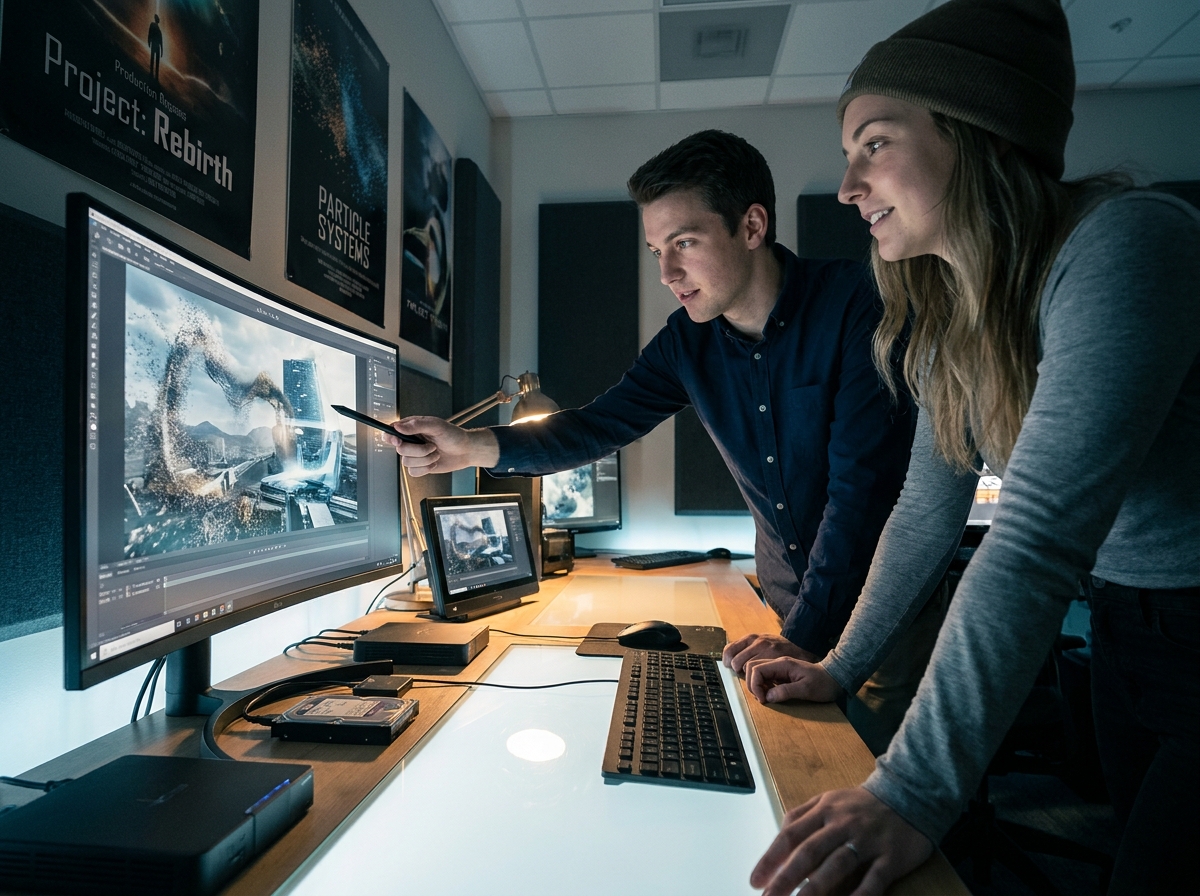
The promotional film, created collectively at the end of the course, concentrates the tensions. You have to manage production like a real studio project: task distribution, adherence to the schedule, management of artistic feedback. This film serves as a collective and individual business card in front of recruiters. A failed shot in a promotional short film can cost the student who produced it their first job.
- The production phases (modeling, animation, rendering, compositing) follow one another with tight deadlines that simulate the constraints of a real studio
- Each student must extract usable elements from this collective project for their personal demo reel, which requires additional work for selection and re-rendering
- Group management reveals disparities in skill levels and motivation that add organizational pressure absent from individual exercises
The curriculum prepares technically. It does not always prepare for the administrative and contractual realities of the profession, nor for managing a freelance career. The students who fare best are those who start building their professional network and online presence even before finishing their training, without waiting for the diploma to do the work for them.