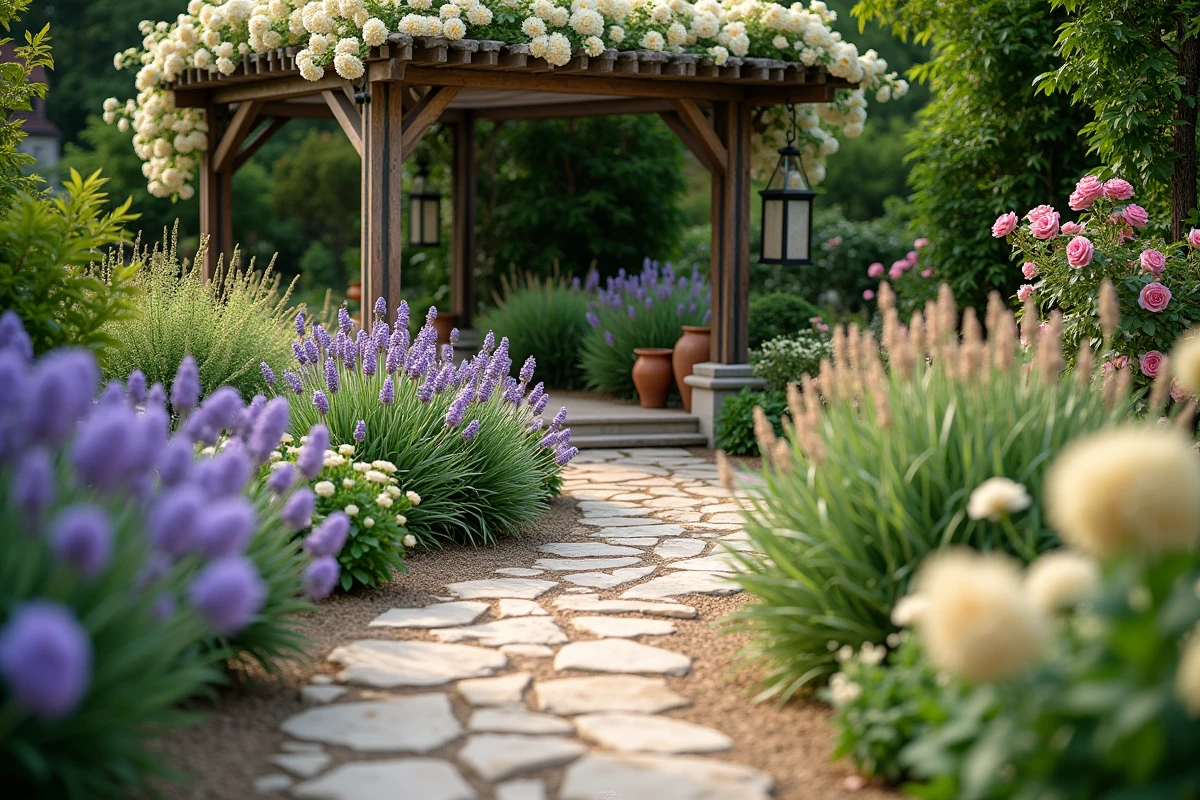
A gently sloping plot facing west, a clayey soil that sticks to your boots after every shower, a hedge of thuja that blocks light on the northern third of the lot. Before choosing any plants or coverings, it’s worth taking the time to assess the land. The orientation, soil type, and shaded areas determine everything else for a harmonious garden.
Soil and shade assessment before any garden layout
We start by digging. A simple test involves taking a handful of moist soil and rolling it between your fingers. If it forms a smooth sausage, the soil is clayey and retains water. If it crumbles, it is sandy, well-draining but low in nutrients.
This information radically changes the list of possible plants. Sandy soil is suitable for lavenders, ornamental grasses, and sedums. Clayey soil better supports hydrangeas, hostas, and dogwoods, provided you loosen it deeply before planting.
Mapping shaded areas over an entire day helps avoid costly mistakes. Note the hours of direct sunlight at four times (morning, noon, afternoon, end of the day) on a quick sketch. Areas that receive less than three hours of direct sunlight require shade plants (ferns, brunneras, hellebores), while south-facing spaces welcome aromatic plants and Mediterranean perennials. The outdoor space is structured based on this survey, not the other way around.
To find plants, furniture, and decorative elements suited to these constraints, you can browse the ranges offered on atmospheredujardin.com and cross-reference product sheets with the characteristics of your land.
Gravel, sand, natural stone: choosing ground materials according to use
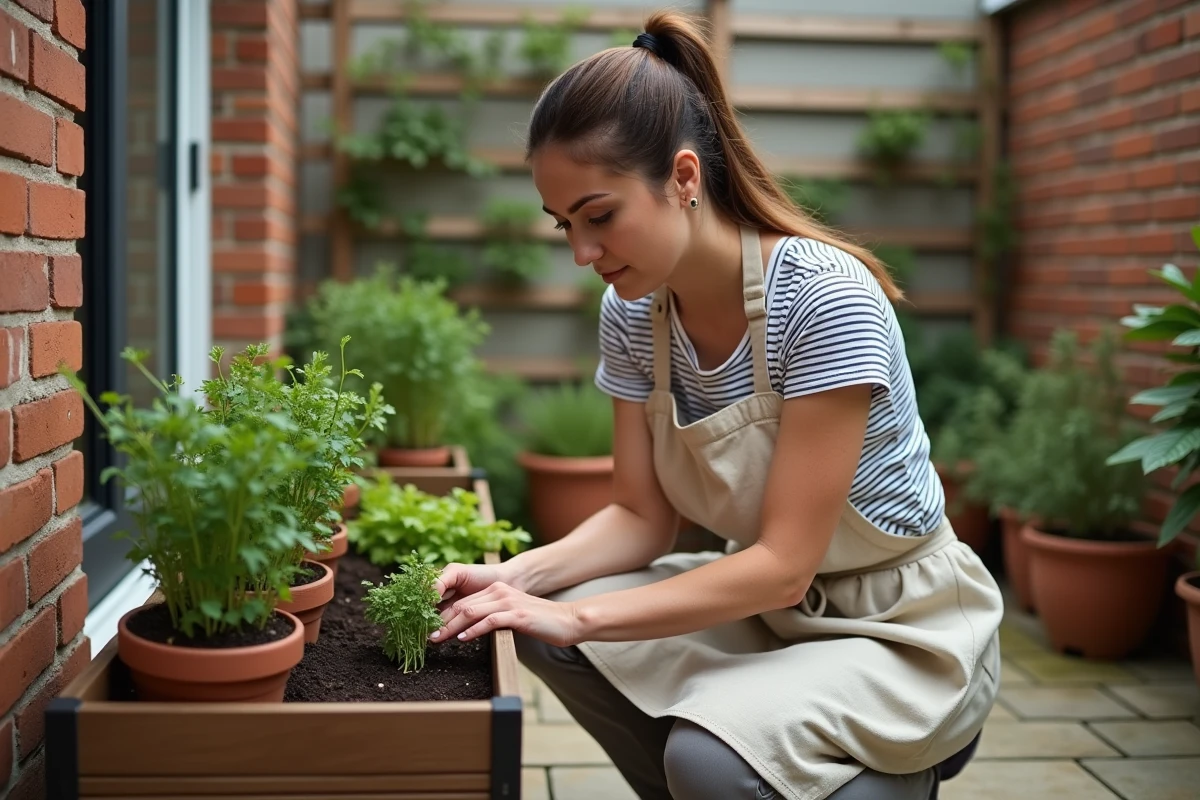
The choice of ground materials structures circulation and defines the atmosphere. You don’t use the same covering for a pedestrian path and a relaxation area intended to accommodate a table for eight people.
- Stabilized crushed gravel works well for secondary paths and around flower beds. It drains naturally, is inexpensive, and can be laid on a geotextile in half a day. However, it shifts under the wheels of a stroller or wheelbarrow.
- Natural stone slabs (sandstone, slate, travertine) are suitable for terraces and reception areas. They resist frost if their porosity is low, but the budget can rise quickly.
- Compacted sand creates soft surfaces, suitable for play areas or Japanese-inspired gardens. It requires regular replenishment and good lateral confinement (steel or wooden borders) to prevent it from migrating into the flower beds.
- Mineral mulch (pumice, schist) advantageously replaces decorative gravel around Mediterranean plants. It limits evaporation and retains heat at the base of tender plants.
The practical rule: limit the number of materials to three per garden to maintain visual coherence. A mix of light gravel for pathways, dark stone for the terrace, and organic mulch in the flower beds is enough to create contrast without disorder.
Structuring relaxation and passage areas in a small garden
On a modest plot, the temptation is to concentrate everything in the center. This results in an outdoor space that resembles a single room without nooks or surprises. It’s better to divide the land into three distinct areas, even small ones, connected by plant or mineral transitions.
Define without partitioning
Tall grasses (miscanthus, pennisetum) planted in a line create a visual filter between the terrace and the back of the garden without blocking light. They move with the wind, adding movement to the landscape.
A change in level, even by twenty centimeters, creates a clear separation effect. You can create a slight elevation with wooden sleepers or dry stone walls to isolate a reading nook or an elevated vegetable garden from the rest of the layout.
Placing the terrace in the right spot
The terrace does not necessarily have to be attached to the house. If the best exposure is at the back of the garden, you can place the dining area there and connect the two with a planted path. Orientation takes precedence over proximity to the building.
Opinions vary on the ideal distance between the kitchen and the terrace, but beyond fifteen meters, the journey with dishes becomes a real barrier to daily use. You have to balance solar comfort and logistical practicality.
Plant design: combining plants in layers for a garden that lasts all year
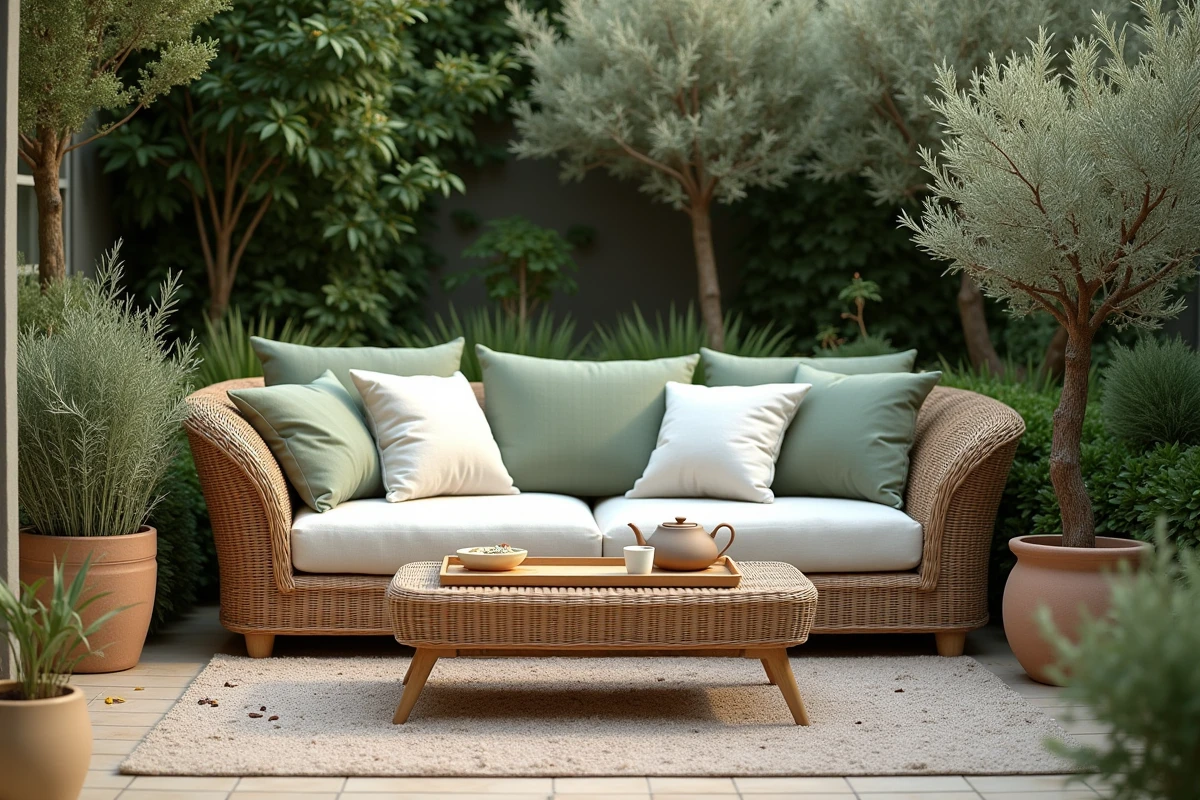
Planting in layers means stacking heights of vegetation within the same bed. Starting from the ground, you layer ground covers, medium perennials, shrubs, and a canopy tree. This principle mimics the structure of a woodland and reduces maintenance by limiting the space available for weeds.
A bed oriented in partial shade can combine perennial geraniums as ground cover, astilbes with summer blooms in the mid-layer, and a colorful wood dogwood in the background. The flowering extends from spring to autumn without major intervention.
For a full sun bed with well-draining soil, you can combine creeping thyme at ground level, knee-high shrub salvias, and a laurustinus in the back of the bed. The laurustinus retains its foliage in winter, preventing the “empty bed” effect from December to March.
- Low layer (less than twenty centimeters): evergreen ground covers, early bulbs.
- Intermediate layer (forty to eighty centimeters): staggered flowering perennials, compact grasses.
- High layer (more than one meter fifty): structural shrubs, small trees with a light form.
Choose at least one evergreen element per layer so that the bed retains a visible framework even in mid-winter. A harmonious garden is judged in January, not in June.
The last point to check before planting: the distance between each plant. Plants are often planted too closely out of impatience. Allowing the space intended for the adult size of the plant avoids severe repeated pruning and root competition that exhausts the weaker plants in the bed.