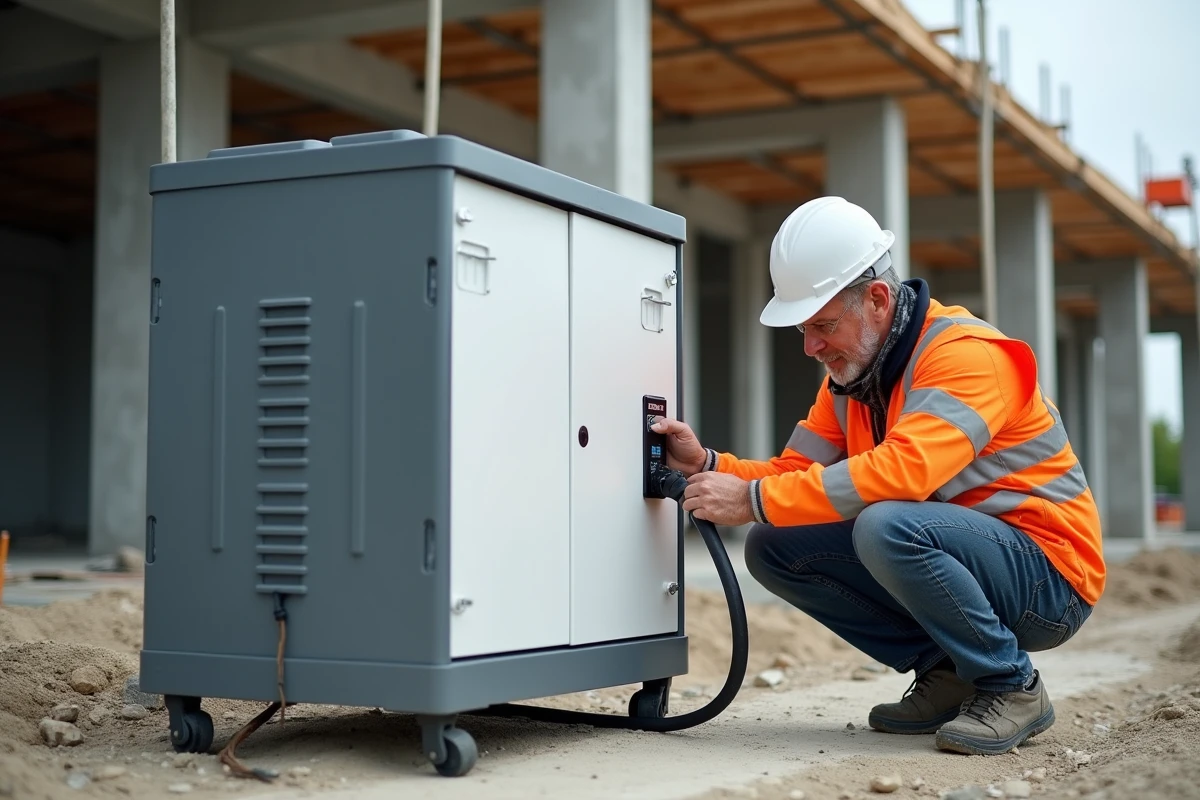
A portable solar battery stores energy produced by photovoltaic panels and delivers it as usable electricity on-site. On a construction site without a grid connection, this type of equipment replaces a thermal generator while eliminating direct emissions and noise. Renting this equipment, rather than purchasing it, significantly alters the financial and logistical equation of a construction project.
How a solar battery works on an isolated construction site
The principle relies on a coupling between photovoltaic panels and a storage system. The panels capture sunlight, an inverter converts direct current into alternating current, and the battery accumulates the surplus for use outside of sunlight hours.
On a construction site, consumption is rarely linear. Power tools, lighting, welding stations, or pumps operate intermittently. The battery smooths out these demand spikes by delivering stable power, which protects both the connected equipment and the lifespan of the storage system.
The necessary capacity depends on the type of work. A finishing work site (painting, finishing, installation of joinery) consumes significantly less than a structural work site with concrete mixers or light cranes. Before choosing a solution, it is essential to estimate the required peak power and the desired autonomy in hours without sunlight.
When the decision is made to rent a solar battery for a construction site, the provider typically sizes the kit according to the specifications provided by the project manager or construction company.
Financial advantages of renting versus purchasing panels and batteries
Purchasing a complete system (panels, battery, inverter, wiring) represents a significant investment. For a company managing multiple projects simultaneously, tying up capital in equipment that will only be used occasionally impacts cash flow.
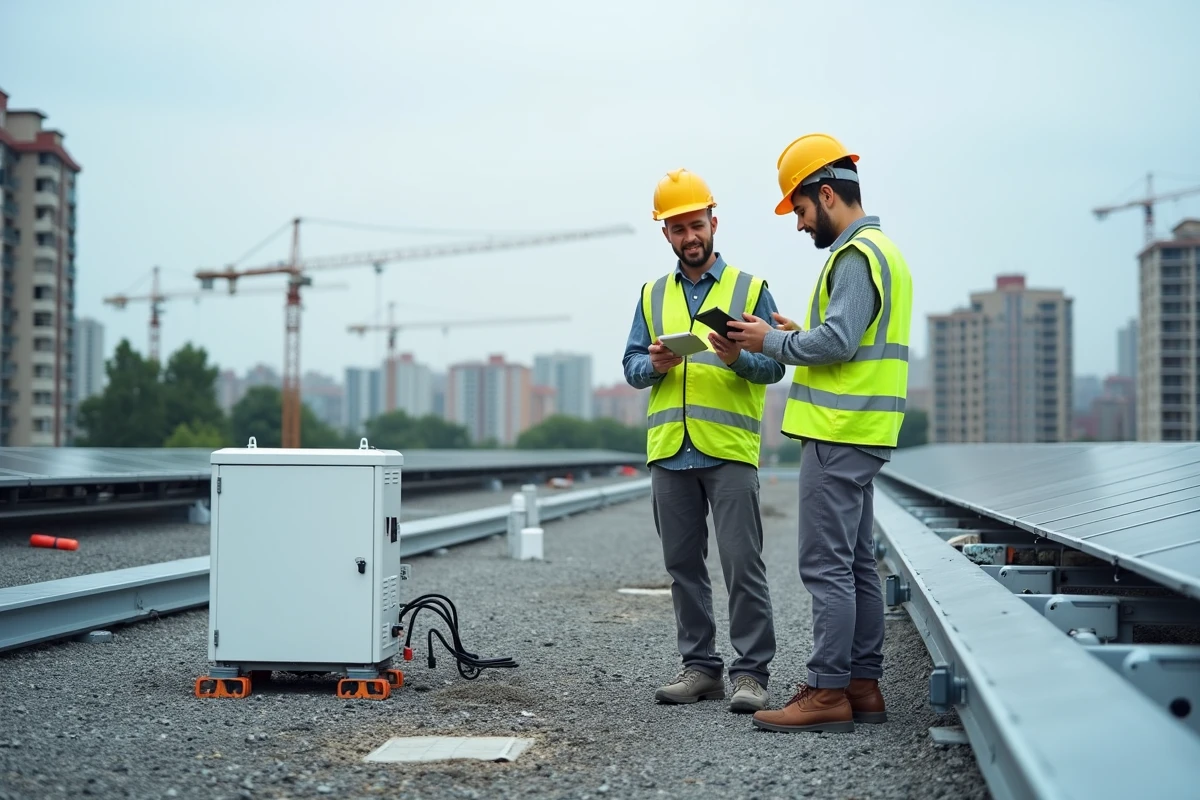
Renting transforms this expense into a predictable operating charge. The price is known in advance, often calculated weekly or monthly, and the contract covers maintenance as well as replacement in case of failure.
- No accounting depreciation to manage: the battery does not appear on the company’s balance sheet, simplifying the financial management of the site.
- Adaptation to the project: a small project lasting a few weeks requires a lightweight kit, while a project lasting several months can evolve into a more powerful configuration, without resale or storage of unused equipment.
- Maintenance included: lithium-ion batteries gradually lose capacity. When rented, the risk of degradation and the cost of replacing cells remain the responsibility of the lessor.
The total cost of ownership of a purchased battery often exceeds that of renting when the annual usage rate is less than a few cumulative months. This is the case for most construction companies that do not have a permanent need for off-grid solar power.
Regulatory constraints and noise disturbances on construction sites
Construction sites located in urban areas or near residences are subject to noise restrictions. A diesel generator generates a noise level that can be problematic, especially for work during off-hours or in densely populated residential areas.
A solar battery is silent. No moving mechanical parts, no combustion, no vibrations transmitted to the ground. This point simplifies the administrative procedures related to construction permits and reduces neighborhood conflicts.
From an environmental standpoint, the absence of fuel eliminates the risk of hydrocarbon spills on the ground. For construction sites in protected areas, near waterways, or on ecologically sensitive land, removing fuel storage on-site is both a technical and regulatory argument.
Producing solar energy on-site also aligns with energy certification processes that some project owners require from their providers. Displaying a reduced carbon footprint during the construction phase becomes a selection criterion in tenders, particularly for public contracts and projects related to energy renovation.
Sizing the solar solution according to the type of project
Not all batteries are created equal, and the choice depends on concrete parameters related to the construction site itself.
- The expected duration of the work: a short construction site favors short-term rental with a compact kit; a project lasting several months justifies a modular system that the lessor can adapt.
- The maximum instantaneous power: some tools (grinders, compressors) require a high starting peak. The inverter must be sized accordingly.
- The orientation and available space: photovoltaic panels require an unobstructed area, oriented south in the northern hemisphere, with an appropriate tilt angle. On a cluttered site, the usable area of temporary roofing or free ground may limit production.
- The local weather conditions: during winter or under frequently overcast skies, the battery’s autonomy compensates for reduced production, but the storage capacity must be oversized compared to summer.
The rental provider generally conducts a preliminary site audit. This diagnosis includes estimated consumption, terrain geography, and project duration to propose an appropriate configuration.
Solar self-consumption on construction sites and the energy transition of buildings
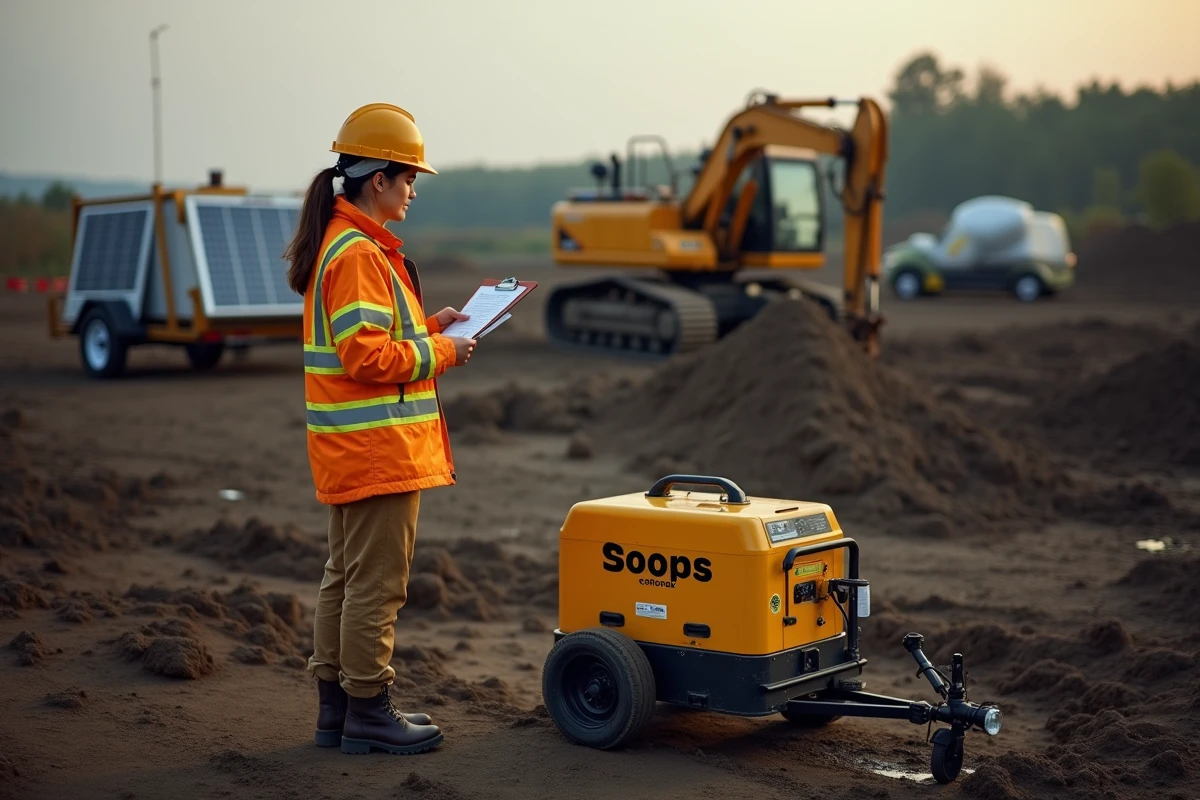
Self-consumption on a construction site means that the electricity produced is consumed on-site, without injecting it into the grid. This model is the simplest to implement because it requires no connection contracts or production meters.
For construction companies, adopting this type of solution on their sites sends a coherent signal when they are also involved in residential photovoltaic installations or energy renovation projects. Building a structure intended to operate on solar energy using solar energy is a logic that is hard to contest.
Renting facilitates this transition. No initial investment in panels or batteries is necessary to test the model on a first site. If the feedback is positive, the company can systematize the approach on its subsequent projects, adjusting the kit size each time.
The last point to consider remains reliability. Next-generation batteries show numerous charge and discharge cycles before any significant loss of capacity. When rented, the equipment provided is regularly renewed, ensuring consistent performance without the user having to monitor cell aging.