
Your roses are growing, the stems are elongating, but the leaves are yellowing or covered with aphids as early as May. Nettles manure can help strengthen the plant and limit these inconveniences. However, it must be applied at the right time, in the right dose, and on the right part of the rose bush. If misused, this natural fertilizer rich in nitrogen may stimulate foliage at the expense of flowering, or even promote certain fungal diseases.
Why the rose reacts differently to nettles manure compared to vegetables in the garden
Nettles manure is often presented as a universal fertilizer for the garden. On tomatoes or zucchinis, the nitrogen it provides boosts vegetative growth, which is exactly what we are looking for. With a rose bush, the logic is different.
A rose bush needs nitrogen in the spring start-up, when it forms its new stems. After this stage, it is potassium that matters for generous flowering. Too much nitrogen after May slows down the formation of flower buds and produces soft shoots, more vulnerable to aphids and powdery mildew.
Nettles manure also acts as an elicitor: it triggers natural defense mechanisms in the plant against soft-bodied insects (aphids, mites) and certain diseases. It is this dual action, both nutritional and stimulating, that makes it useful on roses, provided you know how to use nettles manure on roses with a schedule adapted to their flowering cycle.
Have you already noticed that some roses produce a lot of leaves but few flowers after an application of nitrogen fertilizer? This is precisely the trap to avoid.
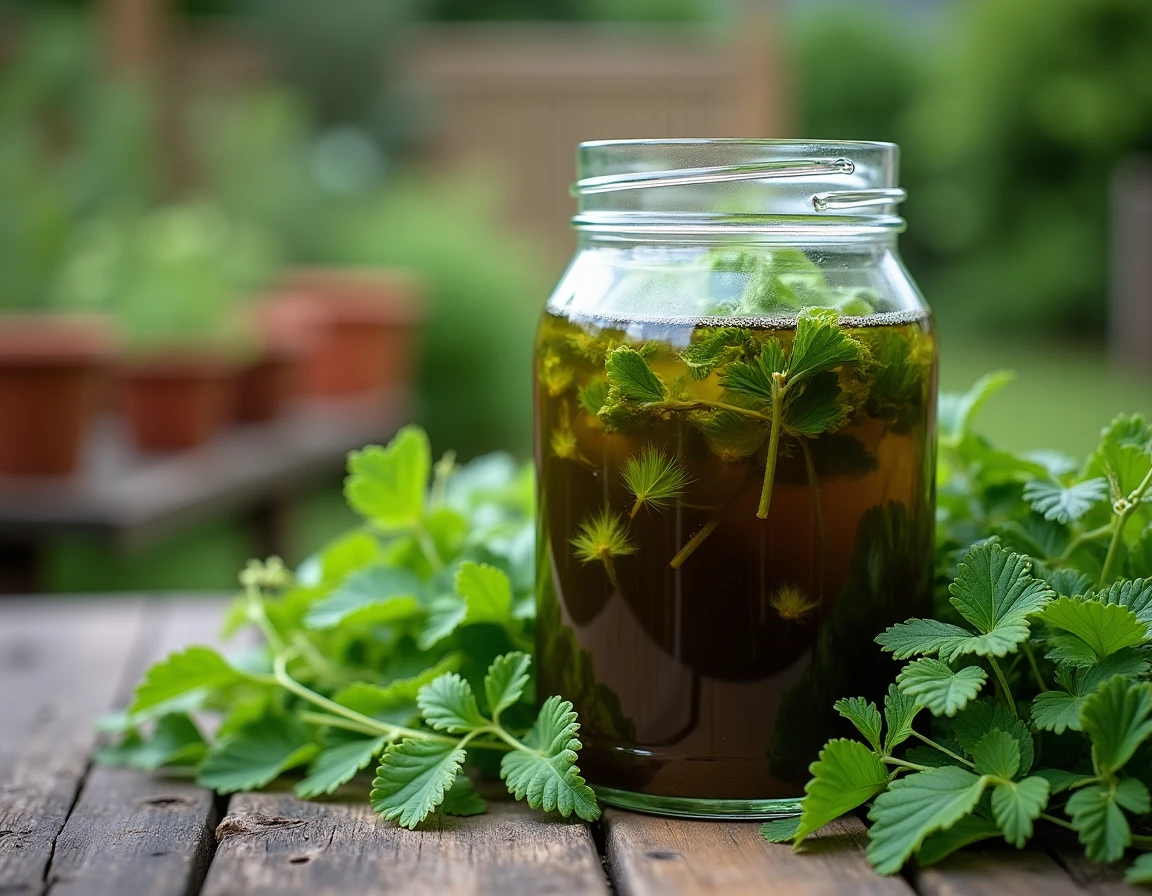
Dosage of nettles manure for roses: root watering vs. foliar spraying
The two methods do not have the same objective and do not require the same dilution.
Root watering to nourish
Dilute the fermented nettles manure in rainwater, at a ratio of about one volume of manure to ten volumes of water. This dilution serves as a nitrogen liquid fertilizer. Water directly at the base of the rose bush, on already moist soil, to avoid burning the shallow roots.
Limit this application to two or three times between March and mid-May. Beyond that, you risk nourishing the foliage at the expense of the roses. If your soil is already rich in organic matter (regular mulching, compost), a single early-season application may be sufficient.
Foliar spraying to stimulate defenses
When spraying on the foliage, the dilution is greater: about one volume of manure to twenty volumes of water. The goal is not to nourish, but to activate the natural defenses of the rose bush against aphids and fungal diseases like marsonia or powdery mildew.
Spray early in the morning or late in the day, never in full sunlight. Recent technical guides emphasize a point often overlooked: avoid spraying in hot and humid weather. Foliage that remains wet under these conditions becomes a favorable ground for fungi, which nullifies the desired benefit.
Application schedule for nettles manure on roses according to the season
The right product applied at the wrong time yields nothing. Here are the most relevant intervention windows:
- From March to mid-April, a diluted root watering accompanies the budding. The young shoots benefit from nitrogen and iron for dense, green foliage.
- From mid-April to mid-May, a foliar spray every two weeks strengthens resistance to aphids, which colonize the forming buds.
- After the first flowering (June), stop applying pure nettles manure. If you wish to continue stimulating the rose bush, switch to a nettle-comfrey mix: comfrey provides the potassium that supports the flowering rebounds.
- In autumn, a last light root watering (same dilution) can help the rose bush build its reserves before winter, but it is not essential if the soil is properly mulched.
This schedule applies to remontant roses. For a non-remontant rose that only blooms once, concentrate all applications between March and May.

Nettles manure and comfrey for roses: the mix that changes flowering
Several manufacturers have been offering mixed fermented nettle-comfrey extracts labeled “special for roses” for a few years. The principle is simple: nettles stimulate natural defenses and provide nitrogen, while comfrey complements with the potassium necessary for flowering.
You can make this mix yourself. Prepare your two manures separately, then mix them at the time of dilution. One-third nettles manure to two-thirds comfrey manure provides a good balance for roses in full bud period.
This dosage corrects the main flaw of using nettles manure alone: its excess nitrogen compared to the needs of a flowering shrub. The result is evident in the longevity of the roses, which stay on the stem longer, and in the color of the foliage, which retains a strong green without becoming excessively tender.
Common mistakes with nettles manure on roses
Some common practices reduce the effectiveness of the treatment or cause avoidable damage:
- Using unfiltered manure in the sprayer. Residues clog the nozzle and leave organic deposits on the leaves, promoting diseases.
- Applying pure nettles manure without dilution. Concentrated manure burns the roots and foliage, even on a vigorous rose.
- Continuing nitrogen applications after June on a remontant rose. The rose then produces suckers instead of preparing for its second wave of flowers.
- Spraying in the middle of the day during high heat. Water evaporates before the plant can absorb the nutrients, and the risk of leaf burn increases.
Nettles manure has benefited since the decree of April 27, 2016, from the status of a low-concern natural preparation (PNPP), which regulates its marketing and amateur use. This official recognition confirms its interest but does not exempt from respecting dosages and application periods.
A well-nourished rose at the right time, with properly diluted manure applied before heat peaks, develops resilient foliage and prolonged flowering. Nettles manure remains one tool among others in the gardener’s toolkit, not a substitute for mulching, pruning, or choosing varieties suited to your soil.