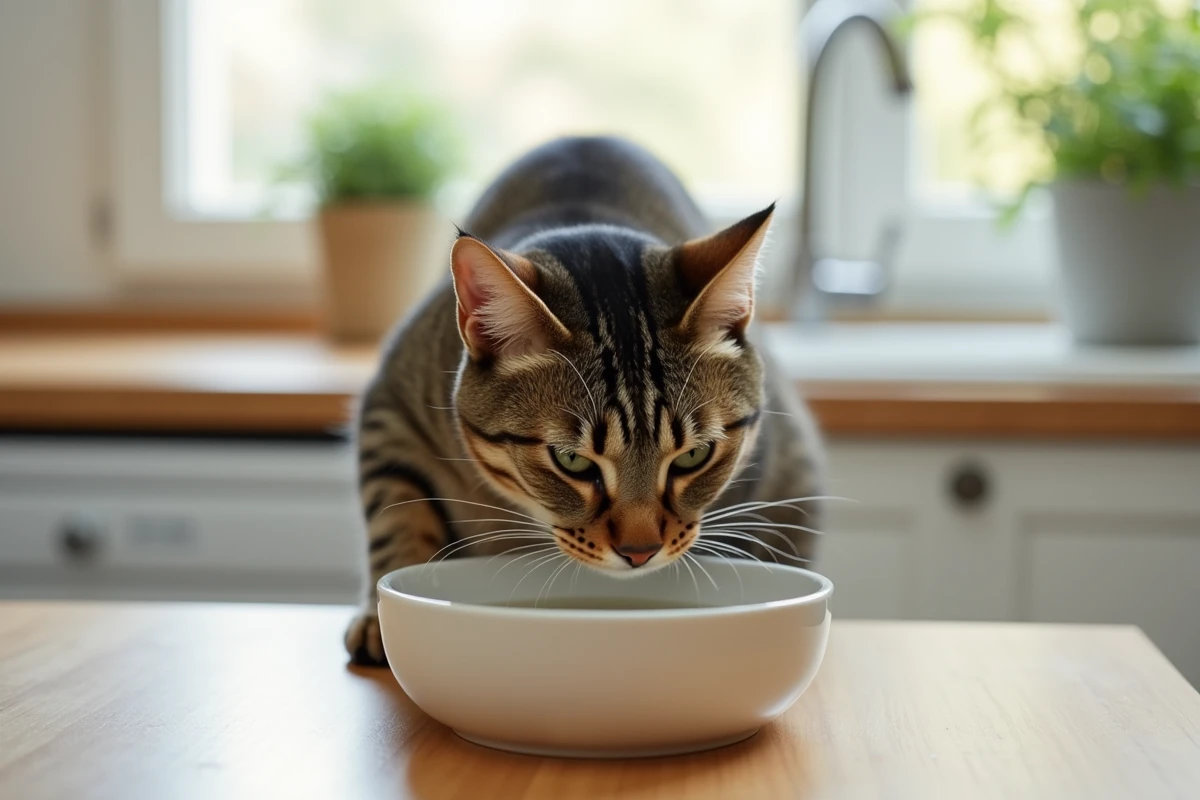
Mont Roucous has one of the lowest dry residue levels in the French bottled water market, making it a frequent reference in feline nutrition. Its low mineral content follows a specific logic, but the recommendation should be nuanced according to the cat’s clinical profile.
Dry residue and pH: how Mont Roucous’ composition affects the cat’s urinary system
The cat produces naturally concentrated urine. This physiological characteristic predisposes it to urinary crystals and stones, particularly struvite or calcium oxalate types. Choosing water with a low dry residue and low sodium content aims to limit the exogenous mineral intake that could worsen this concentration.
Mont Roucous has a very low dry residue and a slightly acidic pH. This profile aligns with veterinary recommendations for cats at urinary risk, as maintaining a low urinary pH limits struvite crystal formation.
However, we observe that this reasoning does not apply uniformly. A cat suffering from calcium oxalate stones requires a slightly higher urinary pH. The type of stone determines the choice of water, not just the dry residue. Recommending Mont Roucous without knowing the cat’s urinary profile is akin to treating a symptom without a diagnosis.
When a veterinarian prescribes a therapeutic urinary diet, it is formulated to act on pH and urine dilution. The chosen water must remain compatible with this overall nutritional strategy, which is rarely addressed in mainstream articles that systematically recommend Mont Roucous for cats.
Acceptability and actual consumption: the factor that the water brand does not resolve
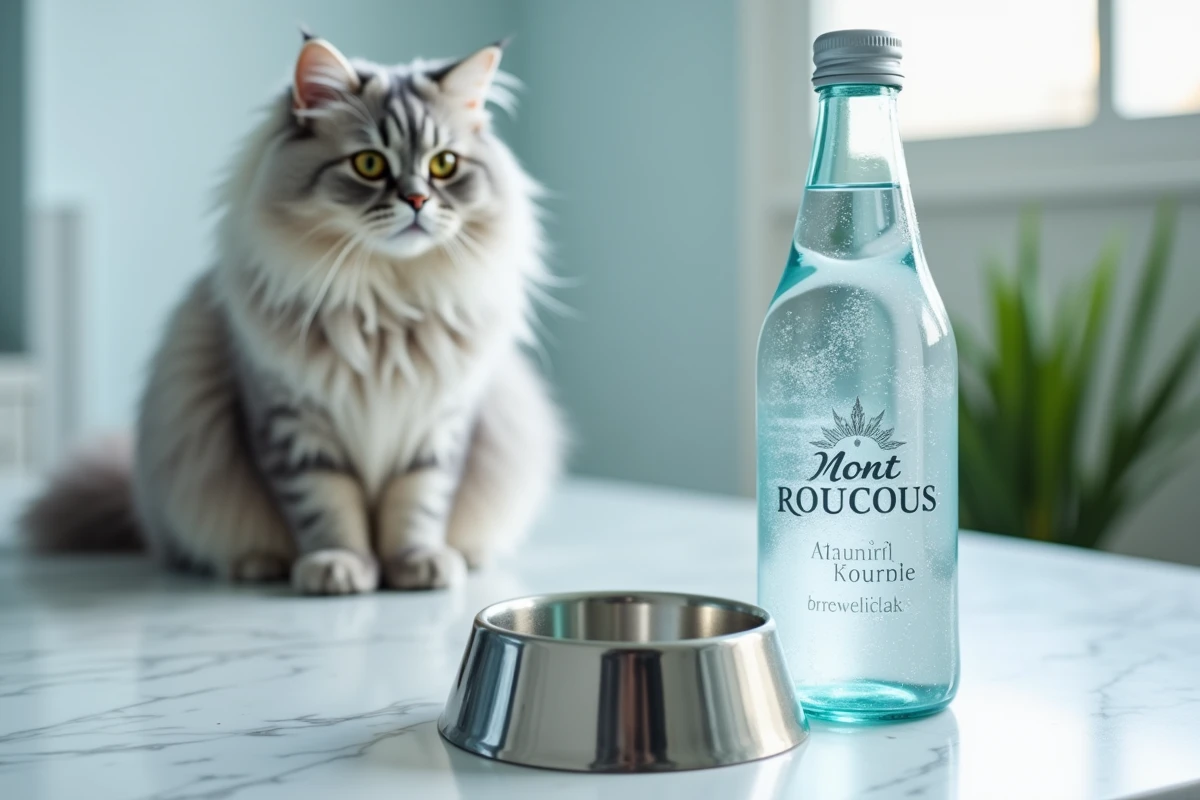
Water that is perfectly suited on paper is useless if the cat does not drink enough of it. In practice, hydration depends more on distribution conditions than on the brand. Temperature, freshness, type of bowl, and the number of water points in the home often influence daily consumption more determinatively than mineral composition.
Cats fed exclusively on kibble are chronically dehydrated compared to those receiving wet food. Switching from tap water to Mont Roucous without changing the diet does not compensate for this structural imbalance.
Factors that actually increase water intake
- Increase the number of water points (at least two, away from the food bowl) to stimulate the cat’s exploratory behavior
- Use ceramic or stainless steel bowls, which do not alter the taste, unlike plastic that can release odors
- Change the water at least once a day, as stagnant water quickly loses its appeal for a cat
- Offer a water fountain, as the movement encourages some cats to drink more regularly
A cat that refuses chlorinated tap water may indeed better accept low-mineral water with a neutral taste. In this specific case, Mont Roucous is a relevant choice. However, attributing hydration improvement solely to the water brand would be reductive.
Tap water, filtered water, or bottled water: practical arbitration for daily feline use
Tap water is suitable for most cats in areas where the hardness is moderate. Letting the water sit for a few hours in a carafe is enough to evaporate the chlorine, the main reason for refusal by the cat.
In hard water areas, low-mineral bottled water is a reasonable alternative. Mont Roucous is not the only option: other waters have a comparable profile with low dry residue and low sodium content. The selection criteria remain the same: dry residue, sodium content, and pH.
What the container changes
Plastic bottled water raises the issue of microplastics, a topic still under-researched in veterinary medicine but increasingly monitored in human health. For daily use over several years, activated carbon filtered water offers a compromise between quality and practicality. It reduces chlorine and some residues without significantly altering the base mineralization.
The cumulative cost of bottled water over a cat’s lifespan (often over ten years) represents a significant expense. We recommend evaluating this parameter, especially in multi-cat households where daily consumption increases proportionally.
When Mont Roucous is truly suitable and when it is not
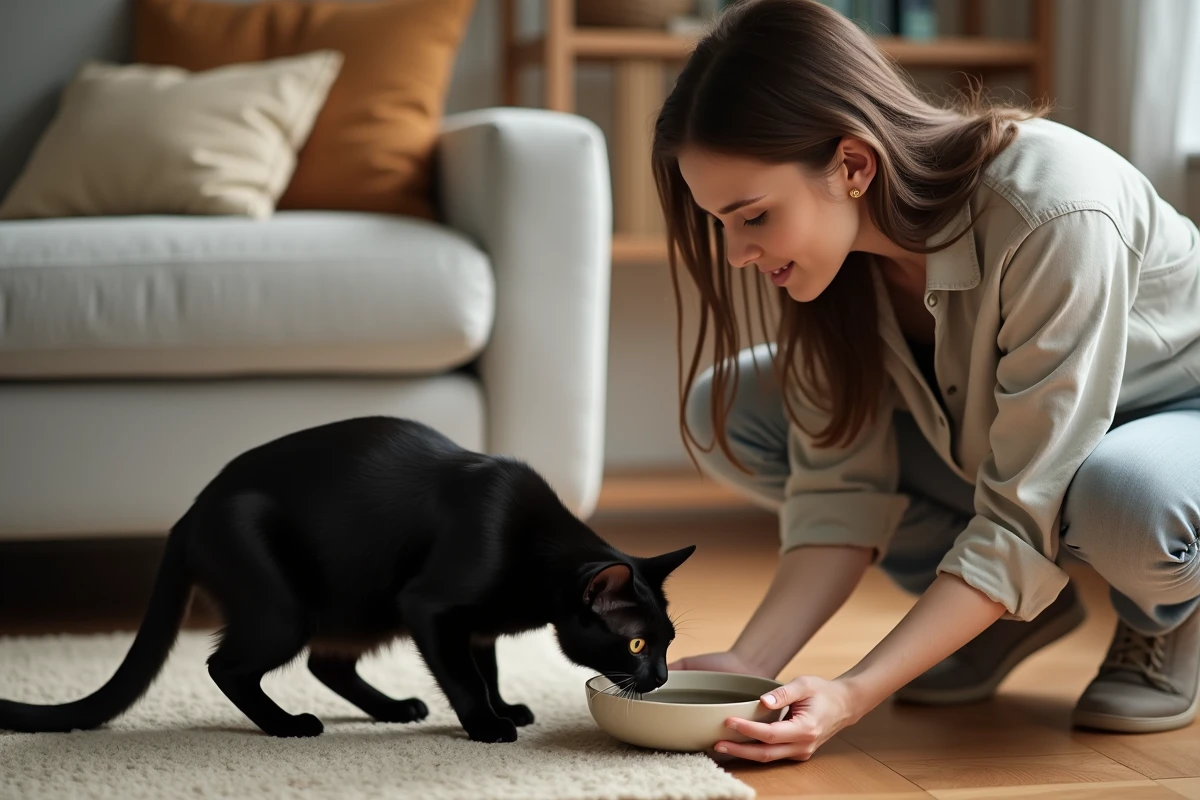
Mont Roucous is most relevant for cats with a history of struvite stones, fed kibble, and living in a hard water area. This profile combines three urinary risk factors that this water helps mitigate.
It does not provide any specific benefit for a healthy cat with good renal function, fed wet food, and having access to quality tap water. In this case, changing water does not measurably improve hydration or urinary health.
Cats with renal insufficiency are a special case. Their hydration management falls under veterinary supervision, and the choice of water is part of a broader protocol that includes therapeutic feeding and sometimes subcutaneous infusion. Recommending Mont Roucous as a standalone solution for these patients would be a risky simplification.
The most useful reflex remains to check the composition of the water supplied locally (available on the municipal or regional health agency website) and compare it to the specific needs of the cat. Tap water with moderate dry residue and low sodium often makes bottled water purchases unnecessary.